

Sponsorship Is a Licensing Unit Now. Who Sponsors the AP Agent?
Ask who owns the accounts payable agent and you will get a build answer. A consultant configured it. A maker published it. IT keeps the environment running. None of those people is a sponsor. And sponsorship has quietly become something you pay for.
What Does Agent 365 Licensing Actually Count?
Agent 365 licensing counts people, not agents. Agent 365 reached general availability on 1 May 2026. It governs agents rather than building them. It registers them, gives them identities, applies protection and reports on them. Microsoft’s own documentation calls it the service that “provisions and governs agent accounts, giving admins user-grade visibility and control.”
Published analysis of the terms describes the shape as per user. One licence covers every agent a person works with, manages, owns or sponsors. On that reading, the agents themselves carry no licence at all. So the unit of cost is a person with a tie to an agent. Sponsorship is one of those ties. It is also the one nobody has filled in.
Why Does That Break on an AP Agent?
Because an AP agent has plenty of users and almost never has a sponsor. Finance staff work with it every day. A maker built it. An admin governs the environment it runs in. Nobody in finance has been named as answerable for what it does, because no step in the build ever asked for that name.
That leaves two awkward readings. Either nobody holds the tie the model counts, or everyone who touches the agent holds it. In the second case the count is bigger than the budget assumed.
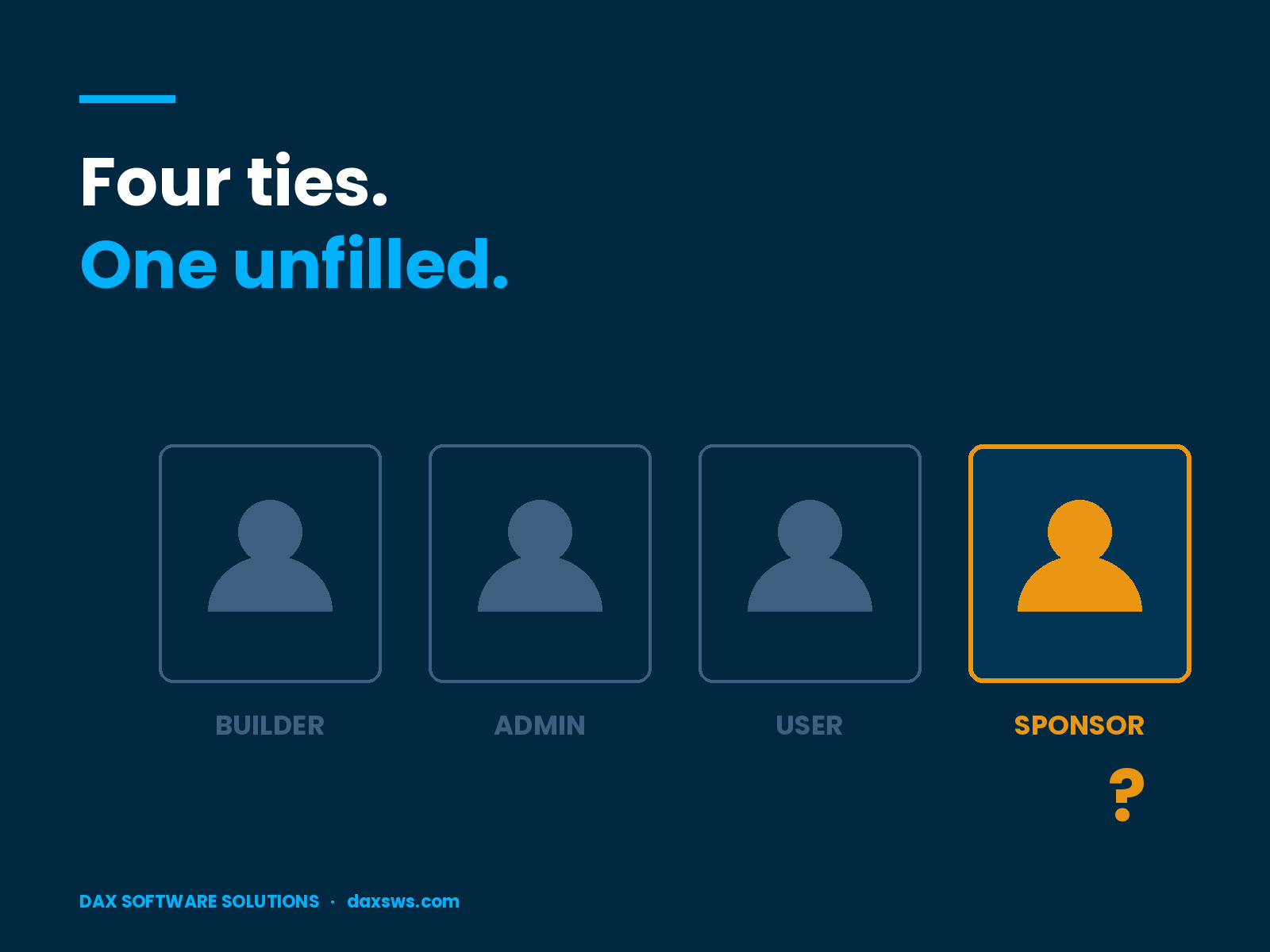
Which Four Relationships Should You Separate?
Most teams fold all four into “whoever built it”. Agent 365 licensing does not.
- Builder. Configured and published the agent. Usually a maker or a consultant.
- Administrator. Governs the environment, the connectors and the policies.
- User. Works with the agent as part of their job.
- Sponsor. Owns the business outcome, the scope, and the decision to keep it running.
A builder moves on. A sponsor is meant to stay.
What Does a Sponsor Statement Need to Say?
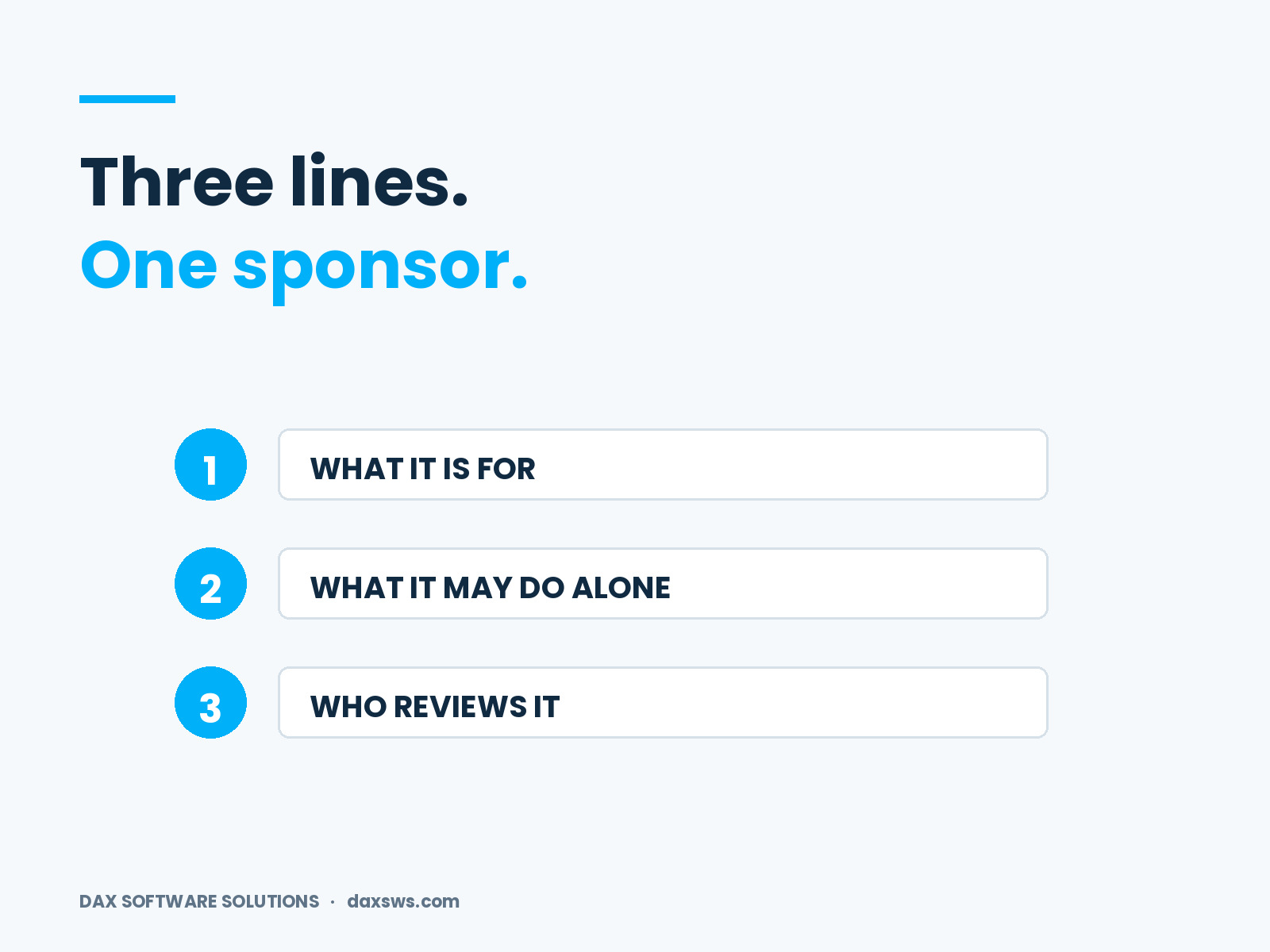
Three lines, written by the sponsor rather than about them.
- What this agent is for, in one sentence a finance director would recognise.
- What it may do on its own, and what it has to escalate.
- Who reviews it, and how often.
A name with no remit is just a name on a spreadsheet. The remit is what makes the role real when something goes wrong.
Where Should the Sponsor Be Recorded?
In whatever your organization treats as the authoritative agent record. Agent 365 includes a registry and an inventory. Reporting suggests a free base tier covers agent identity and inventory for Microsoft Cloud customers. An inventory with no sponsor field is a list of things nobody owns.
Make the sponsor a required field before anyone publishes, rather than a note added later. Then tie the sponsor review to your joiners and leavers process. Sponsorship decays faster than anything else about an agent. People change roles and the agent keeps running, because nothing in a job change touches a published agent.
Why Does This Change the Forecast?
Because the count moves with relationships, not with agents. Seat forecasting assumes cost rises when you add people to a system. Here cost rises when a person takes on a tie to an agent. That can happen with no purchase, no project and no ticket.
A model built on agent counts will drift from the invoice inside a quarter. That shape is new to most AI business cases. It sits next to the usage question we covered in the Copilot capacity trap.
Is This Really a Licensing Problem?
It is an accountability problem that licensing made visible. An AP agent matches, approves or posts against supplier records. When it gets one wrong, somebody has to own the result, explain it, and decide whether the agent keeps running. That is a finance job, not a platform job. We have argued before that agent governance is an org-design problem rather than a policy document. Sponsorship is the sharpest form of that argument, because it now carries a price.
Frequently Asked Questions
Is Agent 365 licensing per agent or per user?
Published analysis of the terms describes a per-user model. One licence covers the agents a person works with, manages, owns or sponsors. Confirm the current terms with Microsoft or your partner before you budget.
When did Agent 365 become generally available?
On 1 May 2026, according to published analysis of Microsoft’s licensing terms.
Does Agent 365 build agents?
No. It governs them. Makers build agents in tools such as Copilot Studio or Microsoft Foundry. Microsoft documents Agent 365 as the layer that provisions and governs agent accounts.
Who should sponsor a finance agent?
Somebody inside the business process, with the authority to say what the agent is for, what it may do alone, and when it should stop.
What to Settle Before the Next True-Up
Name a sponsor for every agent that touches financial records. Do it before the licence review rather than after it. The sponsor belongs in the business process, not in IT. They should be able to state the purpose, the limits and the review date without opening a configuration screen. Reporting on Agent 365 licensing here comes from published secondary analysis, and Microsoft’s terms change. Confirm your own position with Microsoft or the partner who holds your contract before you act on any of this.
At DAX Software Solutions, our Human-in-the-Loop operating model work exists for this gap. Controlled autonomy means a named person stands behind an automated decision, with the power to review it and reverse it. If your AP agent has no sponsor, talk to our team.