

Connecting the Estate: Near Real-Time Sync Between ERP and the Systems Around It
By DAX Software Solutions · · Updated
Ask an IT leader how many integrations the business runs and you get an estimate. Ask them to trace one customer order from the moment it arrives to the moment someone invoices it, and the estimate usually turns out to be low.
That exercise is worth doing before any integration decision, because it turns an architecture question into an operational one. DAX Software Solutions starts most integration engagements this way, and the trace tends to surface two things nobody planned: connections that exist only in one engineer’s memory, and hand-offs that a person performs every morning because nobody ever funded a connection.
Trace the Order, Not the Diagram
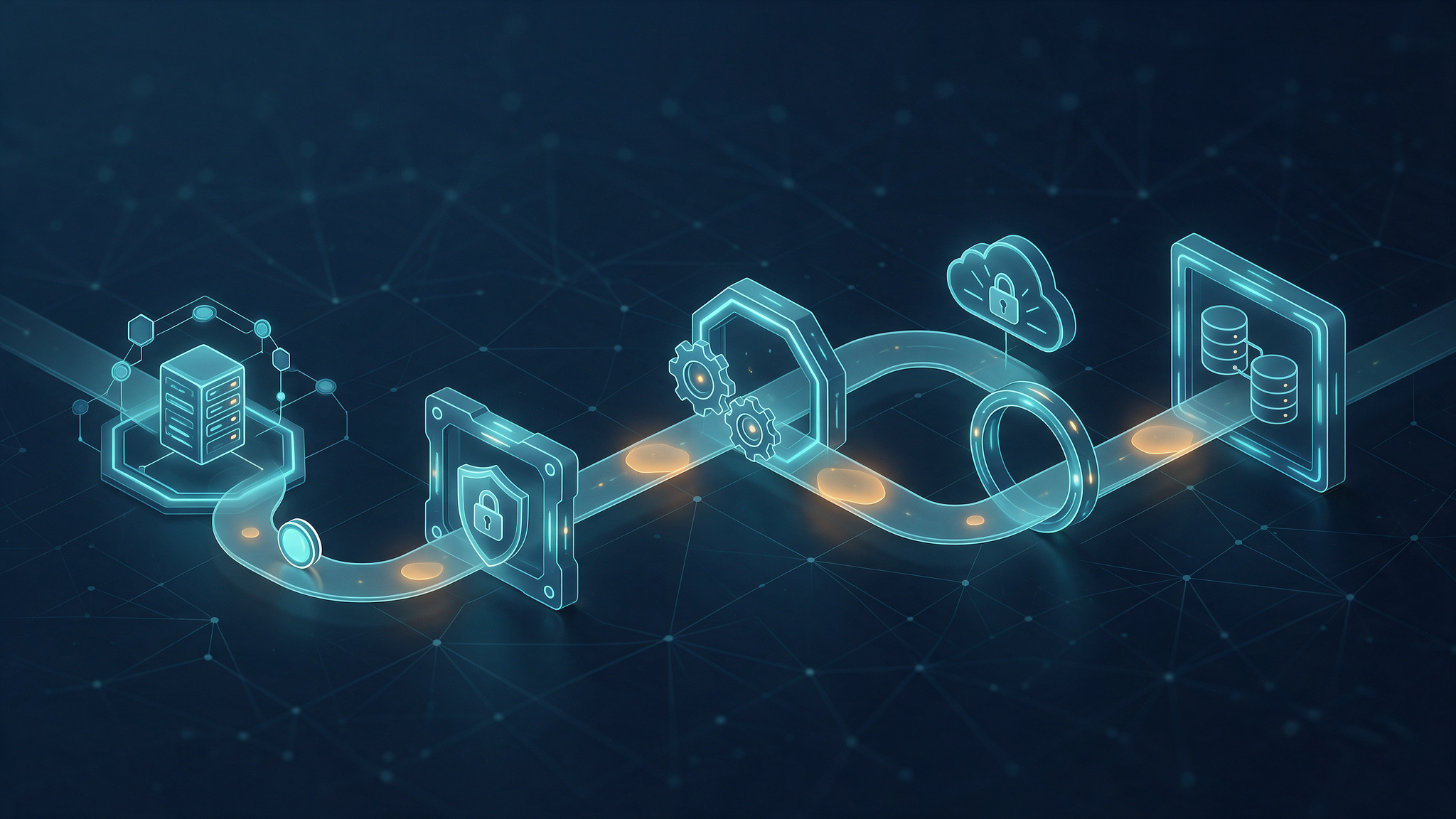
An architecture diagram shows what someone intended. A trace shows what happens. Pick a recent order and follow the record: where it lands first, which system validates the customer, which one prices it, which one commits the stock, which one raises the invoice, and which one tells the customer it shipped.
At each boundary, ask two questions. How does the record get from here to there, and how long does it wait? The answers rarely match the diagram, and the gaps explain most of what the business experiences as slowness.
What a trace exposes that an inventory misses:
- Boundaries where a person moves the record rather than a connection.
- Steps that run nightly because someone picked a schedule years ago and nobody revisited it.
- Systems holding a second copy of the customer, priced differently.
- Hand-offs where nobody can confirm the record arrived until something goes wrong.
Where the Record Actually Stops
Each individual connection looked cheap when someone approved it. Possible connections multiply faster than systems do, so the total cost climbs in a way no single approval ever reveals.
Duplicated logic hurts more than duplicated wiring, though. Consider the rule that decides which customer record wins when two systems disagree: it lives in several connections, written by different people at different times. Nobody should assume those copies still agree, and on a mature estate they usually do not.
The Person Who Became an Interface
Where no integration exists, somebody fills the gap. They export a report each morning and key it into the next system. Every Friday, that same person reconciles two lists by eye. Certain customers need a manual override, and nobody has written the rule down.
Organizations rarely log this as an integration gap. They log it as a job, which is why it survives every technology review. It also carries the estate’s highest error rate and its thinnest documentation, because the rules live in one person’s head rather than in a system.
What Changes When the Estate Has a Middle
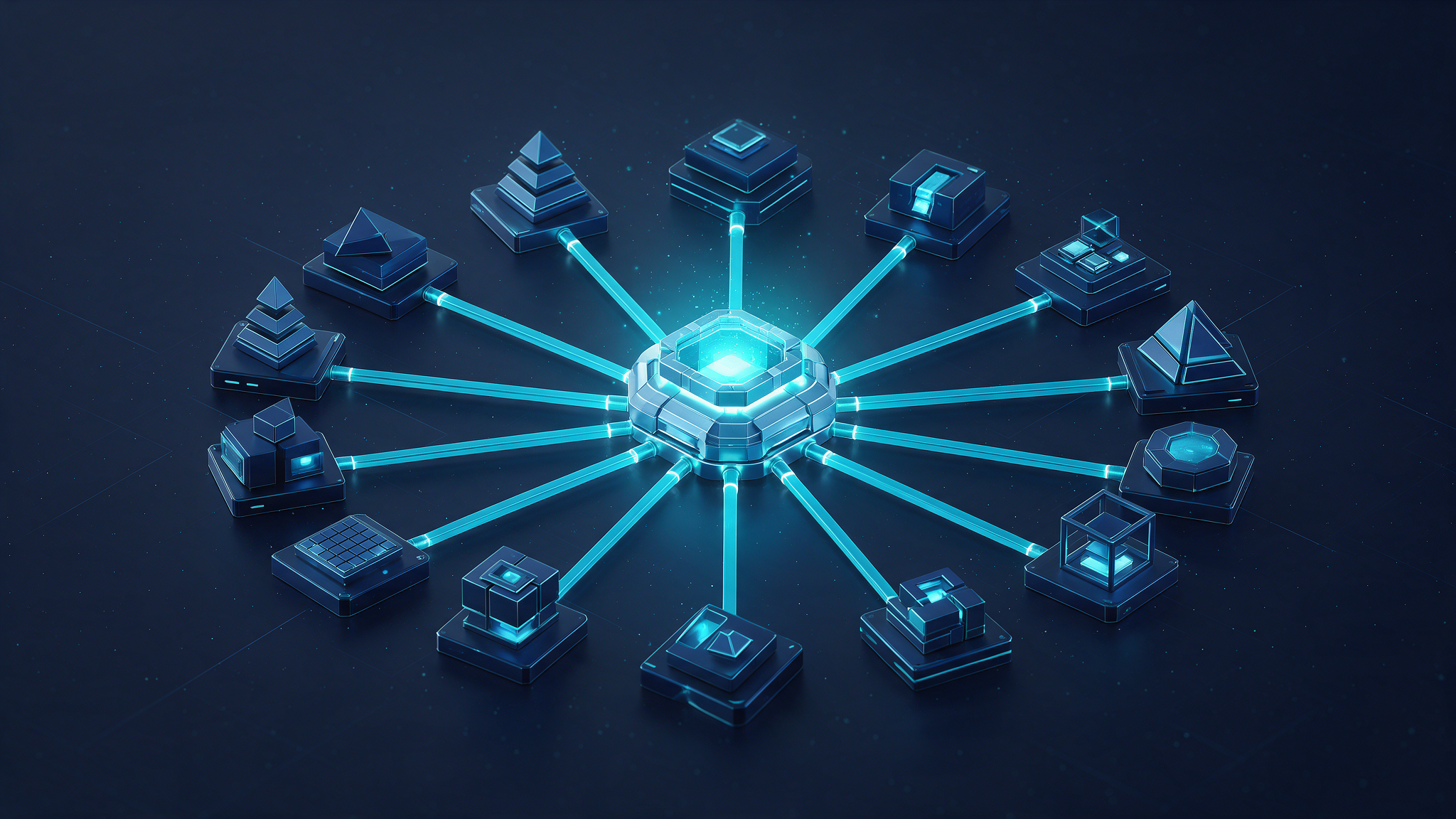
Replacing direct connections with a hub changes the shape of the estate. Systems talk to the platform instead of to each other, transformation rules live in one place, and every message lands somewhere a person can inspect it.
DAX delivers this through Azure integration services and Aonflow, its in-house integration platform, which offers pre-built connectors across CRM, ERP, eCommerce and accounting systems and moves data on a defined schedule, in near real-time where the process demands it.
Two decisions decide whether the new shape holds. First, name one system as the authoritative source for each shared record, customer, item, vendor and price, and let the others receive it. Skip that and consolidation becomes bidirectional synchronization with conflict resolution, which costs far more to build and earns far less trust. Second, give the estate an owner and a documented pattern for adding a connection. Without one, the mesh reforms exactly the way it formed the first time, one reasonable decision at a time.
Why Near Real-Time Is the Honest Promise
Microsoft’s finance and operations apps expose data entities that support synchronous access through OData and asynchronous processing through the Data management framework, including recurring integrations that run on a schedule. Most enterprise volume travels the asynchronous path, because that absorbs batch size and system load safely.
So the record moves quickly rather than instantly. Promising instant propagation sets an expectation the architecture cannot meet, and that gap resurfaces later as reconciliations failing for reasons nobody can reproduce. Near real-time states what a well-built estate actually delivers.
Entities earn their place for a second reason. They insulate an integration from changes to the underlying table schema between versions, which is a large part of why consolidation makes upgrades less dangerous.
What Stopped Breaking
Consolidation sells badly because its benefits are absences. Things that used to fail stop failing, and nobody writes an incident report about an incident that did not happen.
Run the same order trace a year later and four things differ:
- Somebody can answer whether a specific transaction arrived, without opening four systems.
- Upgrades stop triggering a regression test of every connection.
- Two systems agree about the same customer, because one of them owns the record.
- The morning re-keying job has become exception handling, which is better work.
The Three Numbers That Make the Case
Consolidation programs often get justified in general terms and then measured against nothing. Three counts make the before and after comparable, and the trace produces all three.
Baseline these before rebuilding anything:
- Systems connected, counting the ones a person joins as well as the ones code joins.
- Integration count, meaning distinct connections before consolidation and how many the hub replaced.
- Volume synced, transactions or records per day or month by interface, because consolidation moves where the load sits.
Count the manual hand-offs in all three. They usually carry the volume the business needed most and funded least.
DAX Software Solutions: Your Partner in Enterprise Integration
DAX works with organizations to connect ERP to the systems around it, beginning with a trace of what actually happens to a transaction rather than with a platform decision.
DAX helps clients:
- Trace the real path a transaction takes across ERP, CRM and operational systems.
- Consolidate point-to-point connections into a connected architecture.
- Implement Aonflow for connected systems and near real-time synchronization.
- Establish which system owns each shared record, and govern it.
- Assess readiness before layering automation or AI onto a disconnected estate.
Start with one order. The estate will tell you what it costs to run.