


Copilot Agents in Dynamics 365: Where Human Oversight Still Belongs
By DAX Software Solutions · · Updated
For most of the past decade, AI inside enterprise systems answered questions. It summarized a record, drafted an email, surfaced a number. The newest generation of Copilot agents in Dynamics 365 does something different: it takes action. It reads an invoice, matches it, prepares it for payment; it qualifies a lead and updates the pipeline; it works a queue of exceptions while people are doing other things. The shift is no longer about insight — it is about execution.
That shift changes the executive question. The pressure on most leadership teams is to automate quickly and show results. But the harder, more valuable question is not how much can we automate — it is where does human judgment still belong, and how do we keep it there by design. At DAX Software Solutions, we help organizations adopt agentic capabilities in Microsoft Dynamics 365 deliberately, so autonomy is paired with oversight from the start rather than bolted on after something goes wrong.
What Do Copilot Agents in Dynamics 365 Actually Do?

Copilot agents are software workers that carry out multi-step business tasks within defined boundaries, escalating to people when judgment is required.
These are Microsoft capabilities, delivered across the Dynamics 365 portfolio rather than a single feature. Microsoft positions agents and Copilot across Dynamics 365 apps as tools that handle structured, repeatable work in the flow of business. The pattern shows up in several places:
- Finance operations: the Payables Agent in Business Central (in preview) reads invoices, matches vendors and accounts, and prepares them for approval — explicitly with human oversight.
- Sales: a Sales Qualification Agent researches and prioritizes leads so sellers spend time on the opportunities that matter.
- Customer service: agents resolve routine queries and deflect cases, routing the harder ones to people.
The common thread is important: these agents are designed to prepare and propose as much as they execute. Understanding that distinction is the foundation for governing them well.
From Assistance to Action: Why Oversight Is Now a Design Decision
When AI only suggested, oversight was implicit — a person was always the one acting on the suggestion. When AI acts, oversight has to be engineered into the process, because the system can now move without waiting for a human at every step.
This is a structural change, not a tooling upgrade. The risk is no longer that the model gives a wrong answer; it is that a wrong action propagates before anyone notices. A misclassified invoice, an exception cleared on bad data, or a commitment made outside policy now carries operational consequences. Speed without control simply lets an organization make poor decisions faster.
That is why oversight belongs in the design phase. The organizations getting value from agentic capabilities are not the ones automating the most — they are the ones deciding, in advance, which actions an agent may take on its own, which it must propose for approval, and which it should never touch.
Where Human Oversight Still Belongs
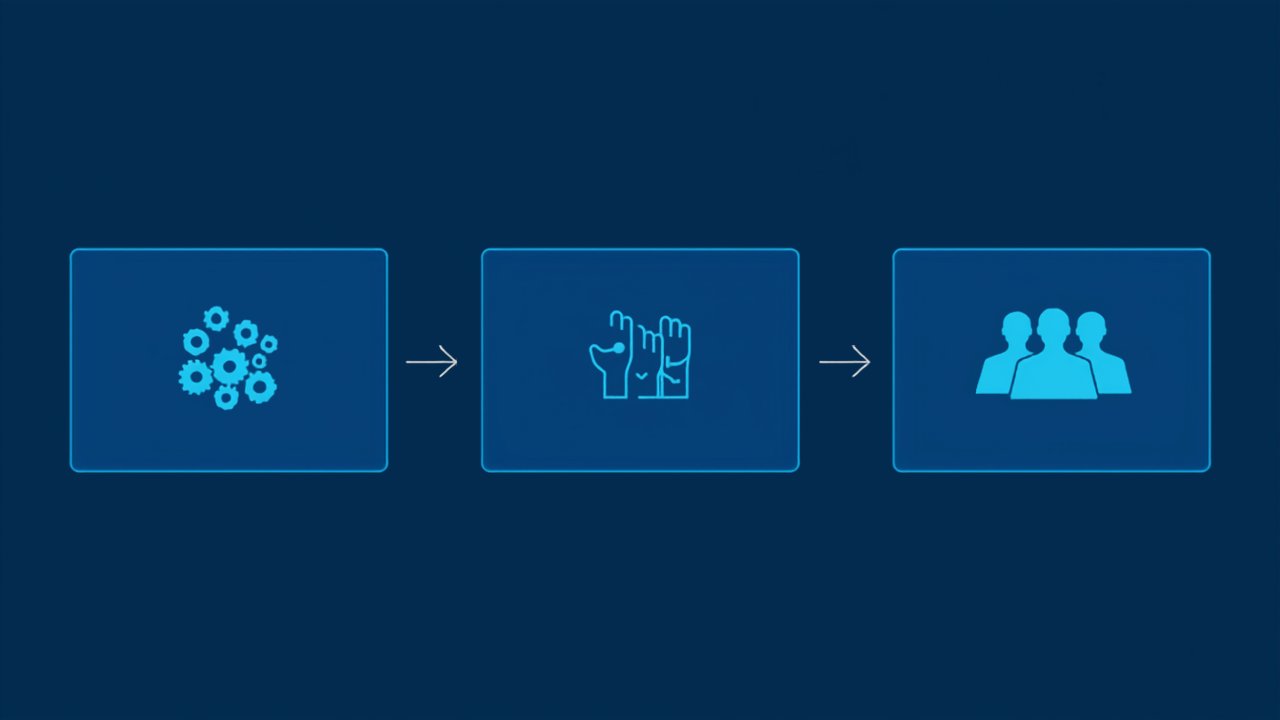
Not every step deserves the same level of control. The discipline is matching oversight to consequence. In practice, human judgment still belongs in four places:
- Irreversible or high-value actions: payments above a threshold, contractual commitments, or anything difficult to claw back belong with a person, not an autonomous step.
- Genuine exceptions: an agent is strong at the routine and the repeatable. The novel, the ambiguous, and the disputed are exactly where experienced people add value.
- Compliance-sensitive decisions: where regulation, audit, or fiduciary duty applies, accountability cannot be delegated to a system — a named person must own the outcome.
- Low-confidence situations: when the underlying data is thin or conflicting, the safest path is to pause and route to a human rather than act on a weak signal.
The goal is not to slow agents down everywhere. It is to let them run freely on the routine while reserving human attention for the decisions where experience, accountability, and context actually change the outcome.
Controlled Autonomy: Readiness, Approvals, and Audit Trails
Keeping humans in the right places is partly a platform capability and partly an operating discipline. Microsoft builds the mechanisms; organizations have to use them well.
On the platform side, Microsoft’s guidance on autonomous agent capabilities describes configuring agents to request approval or confirmation before sensitive actions, and to keep a human in the loop for high-stakes tasks. Administratively, agents pass through an approval process before they are made available, giving IT meaningful control over what gets deployed and to whom. These map directly to the NIST AI Risk Management Framework, which treats Govern as a function spanning the entire AI lifecycle and names human oversight as a defining trait of trustworthy AI.
But mechanisms only work on a stable foundation. An agent acting on fragmented or low-quality data will produce fast, confident, and wrong results. This is why readiness comes before autonomy.
DAX helps clients put that foundation in place through:
- AI readiness assessment that evaluates ERP stability, data quality, integration, and governance before any agent goes live.
- Human-in-the-loop operating models that define, per process, what runs autonomously and what requires approval — the practice of controlled autonomy, not uncontrolled automation.
- Data governance and master data management frameworks that give agents the trustworthy, consistent data their decisions depend on.
DAX Software Solutions: Your Partner in Governed Agentic ERP
Copilot agents in Dynamics 365 mark a real shift from systems that report to systems that act. That shift is an opportunity — but only for organizations that decide, deliberately, where people stay in the loop. The aim is not maximum automation; it is the right balance of speed and control, built on stable systems and trusted data.
DAX Software Solutions helps organizations get there through:
- Agentic ERP strategy and advisory that identifies where agents can responsibly act and where oversight must remain.
- A structured adoption framework — ERP stabilization, data governance, integration, then AI enablement — so autonomy rests on solid ground.
- Governance frameworks that pair Microsoft’s agent capabilities with the human accountability executives and regulators expect.
If your teams are evaluating Copilot agents in Dynamics 365, the first decision isn’t how much to automate — it’s where human oversight belongs. Talk to DAX Software Solutions about adopting agentic ERP with governance at its core.